Showing posts with label insecure writer's support group. Show all posts

Wednesday, 1 July 2015

IWSG - Insecure Writer's Support Group for first July 2015

http://alexjcavanaugh.blogspot.se/p/the-insecure-writers-support-group.html


Anna Nordeman


IWSG - Insecure Writer's Support Group for first July 2015

This is my twenty-fifth post for IWSG. Did you miss my belated IWSG-post for June? Find it here.


What is lost (or gained) in translation? Meow!


Alex J Cavanaugh recently got his Sci-Fi-novel, CasaFire, translated into Turkish!!! Congrats Alex! And this has inspired me to say a few words about the work of translators.


Yes, I was going to write something about working with translations, but I have had no to finish this post. I have had much to do finishing several university courses and working at my new part-time job that I have not been able to post this on time. 
And I am not finished with my incomplete courses yet. I finished an education course and an English course this spring term, but I still have a paper to write for history. I have promised to turn it in the first week of August.  And then the fall term starts in mid-August. I will be taking a course in English.

My former husband has continued to give me worries, but I don't want to go into too much detail about that.

The one fun thing that I have done is to rent a car for the summer. I've got wheels until the end of October! I was lucky to get a very good deal from an aquaintance to my former sister-in-law. And I rented a parking space for it too. 

It is by not means a luxury car, just a compact 1995 model Opal. But it gets me to the farm where I can visit my son and leave my daughter there when she wants to visit her father. My children are growing up too quicky.

It seems that my dealings with cats are not over. At the age of 76, my former sister-in-law decided that she did not want any more kittens to take care of and find homes for. So I said that we would help her. And then one of her year old kittens gave birth to four kittens. So we have nine cats that need new homes. But they are living on the farm, not in our tiny apartment in town.


All I want to do now is to apologise to Alex and hope that he has patience with me. I have lots of ideas for IWSG-posts, but sometimes my computer time is limited.


Best wishes,
Anna


First Commenter:
Tamara Narayan


Wednesday, 3 June 2015

IWSG - Insecure Writer's Support Group for 3rd June 2015 - Looking at writing habits


http://alexjcavanaugh.blogspot.se/p/the-insecure-writers-support-group.html


Anna Nordeman


IWSG - Insecure Writer's Support Group for 3rd June2015

This is my twenty-fourth post for IWSG. 


Looking at writing habits: What keeps you writing? What works for you?


I am asking this question because I am soon at the end of my rope. I am not writing at all. I am beginning to think that I simply may not be cut out to become a writer. I may not have what it takes. There are already so many good writers, why should I write and add one more book to the pile of unread books?

'Well, with that attitude you will not even be considered for publishing!' you say.

(Many thanks to Alex J Cavanaugh for creating a forum where such questions are allowed. It is just writer's bloc or insecurity or doubt.)  

I feel caught between the electronic world and the traditional world of paper and pencil. I don't write by hand anymore and I don't feel comfortable clicking things down directly into a word-processor. 

I am beginning to feel obsolete. Doesn't anyone write in longhand anymore? By chance I happened to find a few pages of praise for writing longhand in K.M. Weiland's book: Outlining your novel; Map Your Way to Success.


For more information


K.M. Weiland's arguments (see page 38) for writing longhand in the beginning of the outlining process are that writing longhand:

¤ Discourages the tendency to censor or edit.
¤ Brings writing down to a primal level.
¤ Provides a change of pace.
¤ Frees imagination by allowing sloppiness.
¤ Frees us from distractions.
¤ Allows a critical editing during transcription.
¤ Gives us an instant hard copy.


I think I'll break out my pens and pencils and start writing on paper again!


Best wishes,
Anna


First Commenter:

Alex J. Cavanaugh

http://alexjcavanaugh.blogspot.se/


Wednesday, 6 May 2015

IWSG - Insecure Writer's Support Group for 6th may 2015

http://alexjcavanaugh.blogspot.se/p/the-insecure-writers-support-group.html


Anna Nordeman


IWSG - Insecure Writer's Support Group for 6th May 2015

This is my twenty-third post for IWSG. 

Looking for my A-to-Z-REFELCTIONS-post? Click here.

 
Writing by hand, longhand, handwriting


I don't know where March and April have gone. I did the A to Z, but I may never do it again, as I have a hard time committing to blogging every single day. I think I only have time for the IWSG once a month, as I think I may have found a part time job. So what am I going to write about for IWSG for the beautiful month of May? Handwriting. 

For several months now I have been trying to go back to writing by hand on paper. I used to write in longhand every single day. But so far, I have not succeeded very well. 

The idea of this post was to be the importance of writing notes by hand and not just dashing things down at the keyboard. But I have spent so much time doing other things, such as helping my daughter and making repairs at home, that I have not written much at all, neither at the keyboard or by hand in a notebook. My mind is full of ideas and first sentences, that have not been recorded in any way or form. This makes me feel  frustrated and worried. I may have let many good ideas and observations just slip away forever.


source


Of course, being historically-minded, I often think about the development of documentation,


source


that is, how people have been able to write down their thoughts with pencil, quill and ink ink, ballpoint pen, typewriter and now a full array of electronic devices.


source


I first thought of posting about handwriting when reading K.M. Weiland's book, Outlining your novel, and found the keywords 'longhand, writing' in her index. 


In no other how-to-write manual have I found handwriting as a topic for discussion in any book for writer-hopefuls. It is as if the younger generation seems to have forgotten how to write in longhand. But there is was, a chapter about the good qualities and usefulness of using a pencil on paper for recording thoughts.


For more information


K.M. Weiland's arguments (see page 38) for writing longhand in the beginning of the outlining process are that writing longhand:

¤ Discourages the tendency to censor or edit.
¤ Brings writing down to a primal level.
¤ Provides a change of pace.
¤ Frees imagination by allowing sloppiness.
¤ Frees us from distractions.
¤ Allows a critical editing during transcription.
¤ Gives us an instant hard copy.


I think I'll break out my pens and pencils and start writing on paper again!


Best wishes,
Anna


First Commenter:

XXX


Wednesday, 4 February 2015

On Punctuation - Insecure Writer's Support Group for 4th February 2015

http://alexjcavanaugh.blogspot.se/p/the-insecure-writers-support-group.html


Anna Nordeman

IWSG - Insecure Writer's Support Group for 4th February 2015

This is my twenty-second post for IWSG. 

 
Punctuation, the teeny-tiny parts of written language

Since February is a short month, I thought I'd write a short post about the tiniest parts of writing, punctuation; those iddy-biddy little dots and squiggles that help our written words say clearly what we mean.

I have always felt uncertain about the rules for using commas, and was delighted to find a really good explanation in a handy - truly pocket-sized - book about the rules of English punctuation. If you also feel uncertain about any area of punctuation, take a look at The Penguin Guide to Punctuation by R.L. Trask. Thanks to Mr Trask, I've learnd that there are four types of commas: the listing comma, the joining comma, the gapping comma and bracketing commas.

Do you know how to use apostrophes (')? Honestly. Do you know the proper use of colons (:) and semicolons (;)? Do you understand the difference between hyphens (-) and dashes (--)? Thanks to R.L. Trask's precise language and clear examples, it is easy to learn punctuation. And Trask's prose that is such a joy to read. 

Who is R.L. Trask? According to the 'About the Author-page' Mr Trask was born in western New York State in the US, but came to study and live in Great Britain 1970. He  worked as a chemist until 1979, when he moved to England and switched to linguistics. His special interests are historical linguistics, grammar and the Basque language. (He must be about 71 years old, if he is still alive today.)

R.L. Trask's book is mainly about the use of punctuation in British English. But Trask also includes how punctuation differs in America and in other English-speaking countries.

I highly recommend R.L. Trask's little guide book about punctuation. It is a non-fiction book that is also a good read.


Another handy pocket-sized reference book about punctuation is the Oxford A-Z of Grammar and Punctuation by John Seely. It is even smaller in size than The Penguin Guide to Punctuation. If you need to take it with you on an air trip or on a camping trip, it fits easily in a coat-pocket or your backpack. 

As the title implies, John Seely has written about more than just punctuation. Seely's book is also a concise description of how English sentences are constructed. The topics in John Seely's book are arranged in alphabetical order, like a dictionary. You can just look up those areas of grammar and punctuation that interest you. 


http://www.amazon.co.uk/Oxford-Grammar-Punctuation-John-Seely/dp/019966918X/ref=sr_1_3


Personally, I enjoyed reading Trask's little book straight through, as if it were a novel. I'm not sure I could read Seely's book straight through, but I am going to try. I just haven't had the time. But I think these helpful books are worth mentioning to anyone who wants to write and be taken seriously.

There seems to be something of a rivalry between these two camps, Penguin och Oxford. In The Penguin Guide to Punctuation, R.L.Trask warns the reader about the Oxford dictionary's use of hyphens in words like electro-magnetic, preferring electromagnetic as the Collins and Longman dictionaries prescribe. He laments: '... Oxford clings stubbornly to the antiquated and pointless hyphen.' (p. 61)

To be fair, I plan to read John Seely's book completely and thoroughly. Both of these books could be useful when and if I ever get a job teaching English!


***

I'm still looking for some kind of income-bringing work, and I've got lots of school work (at the university) to do too. So, I may not have time to blog that much. (But I have pre-scheduled next month's IWSG-post, so please come back for that.)  I may let my daughter, Elisabet, post on my blog. 

Elisabet has already made her debut on my blog with a video about making an uneatable smoothie made out of mustard, milk, ham & cheese spread, ketchup, cappuccino powder, cinnamon, chilisauce, peanut butter, sour cream and popcorn. 

I did the washing up afterwards. Elisabet's and Emilie's smoothie was so bad that Elisabet threw up after eating/drinking it, and then vomited again the next morning. So, don't do this at home. 

For those of you who don't understand Swedish, I'm sorry. The Smoothie-video is really funny in Swedish. But now that you know the ingredients, it won't be hard to follow what Elisabet and her school friend, Emilie, are talking about. (Remember what you've learned from Tina Downey's Swedish Postcards.) 

Check out Elisabet's Smoothie Challenge here.

Best wishes,
Anna


First Commenter:
Alex J Cavanaugh


http://alexjcavanaugh.blogspot.se/p/the-insecure-writers-support-group.html


Wednesday, 7 January 2015

Insecure Writer's Support Group - January 2015

http://alexjcavanaugh.blogspot.se/p/the-insecure-writers-support-group.html


Anna Nordeman

IWSG - Insecure Writer's Support Group for January 2015

This is my twenty-first post for IWSG.
 

Have you ever found a really good quote while reading and then forgot to make a note of where you found it? Which book was it? And you can't seem to find it in any index either. Where is it? Which author could have used a quote like that? 

This happened to me several months ago. And I've been rereading many of my favourite how-to-write-a-novel-books looking for this passage ever since. But luckily, the day before yesterday (21st December), I found the text that I was looking for, and can share it with you here:

In Lisa Cron's thought-provoking how-to-write book, Wired for Story (Reviewed on this blog here), she quotes om page 116, from author Eleanor Brown's novel, The Weird Sisters, to illustrate how much information you can fit into a character's inner thoughts, before she actually responds to a question:
        She remembered one of her boyfriends asking, offhandedly, how many books she read in a year. "A few hundred," she said.
          "How do you find the time?" he asked, gobsmacked.
      She narrowed her eyes and considered the array of potential answers in front of her. Because I don't spend hours flipping through cable complaining there's nothing on? Because my entire Sunday is not eaten up with pre-game, in-game, and post-game talking heads? [---] Because when I am waiting in line, at the gym, on the train, eating lunch, I am not complaining about the wait/staring into space/admiring myself in available reflective surfaces? I am reading!
          "I don't know," she said shrugging.

The theme of this my first IWSG-post for 2015 is the importance of reading fiction, not just for all of us wannabe-fiction-writers, but for everyone, regardless of age or calling in life.  

I may never get my novel(s) finished, let alone published, distributed, and read by others. But the process of dreaming about writing has opened up a new world of reading for me. There are really good books out there to read and enjoy.

I am saying this because I have not always been an avid reader. When I was a young child, the thought of reading a whole novel seemed an insurmountable task. (How will I ever get to the end?)

As I've mentioned several times on these IWSG-posts, I am looking for a part time job or almost any kind of gainful work. During November and December, I took the advice of the employment office seriously and started sending out work applications left and right. And I actually got a job! 

Well, it was only a temporary job as an extra substitute teacher in a local school, and it was only for three days. But still, I was part of a team of teachers trying to get teenagers to read a novel. For two whole days, I sat in a group room as sole teacher of a group of six thirteen-year-old pupils. Every child was given the same young adult-novel by a contemporary Swedish author to read, a novel that I had never even heard of. The story was about children their age. The idea was that by dividing the class into smaller groups, we teachers could read the beginning of this novel aloud and get them started. If we help them get interested in the story, maybe most of them will finish reading it over the Christmas break. So I was reading aloud for three hours.

The next day, I asked each student to read so that everyone had a chance to feel what it is like to read aloud for others. Most of them did a fine job. I started them off with a short passage, a couple of sentences each, and then asked them to read longer chunks of text, several paragraphs. After the morning lesson, they were so tired that they asked if I would read aloud for them the last hour, which I did.

Unfortunately, the teaching job only lasted three days. They needed someone to jump in before the end of term, because the person whom they really wanted to hire was obligated to work until a specific date. 

It was interesting to work with children's reading and see how differently these thirteen-year-old pupils read. One girl read extremely well. Another girl fidgeted and disrupted the class so much that the other pupils asked me if she couldn't be moved to another group. And luckily for me, I was working with a teacher who understood the problem and was willing to move her. But her chit-chat-friend was left with us, and she did not want to read aloud. So when it was her turn, I said that she and I would read together in unison, which we did for two sentences. Then I remained silent and let her continue reading aloud alone for several paragraphs. She did it despite herself.

Hooray for the newbie-teacher! It was starting to feel like a great triumph for me until Miss Chit-Chat disappeared during a ten minute break and never returned to our reading group. So I am not in any position to brag about being an amazing teacher. I know I'm not. But teaching reading at this school has made me think about how important reading fiction is. Obviously, reading is a chore, if not a real pain, for some children, and a joy for others.

All of you wonderful readers and writers out there: Do you remember when you decided to be a reader of fiction?

I do.

I can say the exact date. It was 26th January 2007, when I decided to always have a paperback book with me whenever I go out and might have to wait somewhere, like at the dentist's or while waiting for the tram or bus. 

What happened on that cold and snowy day in January 2007?

I found myself waiting at the Emergency Room, for my, then not yet three-year old daughter, Elisabet, to have a 4 cm (approximately 1½ inch) down-to-the-bone gash in her forehead patched together by a specialist children's plastic surgeon. From three o'clock in the afternoon until nine o'clock in the evening I held her, wiping blood, singing lullabies and dealing with questions from different categories of medical professionals until Elisabet finally was put under general anesthesia for the operative procedure to repair what looked like a bloody third eye in the middle of her forehead.

I had nowhere to go while my daughter had surgery. I waited in an empty waiting room. Then I was there with her when she woke up and was moved to the Intensive Care Unit for observation, and followed her to the Children's Ward where, in the small hours of the morning, I was offered a cot to sleep on next to her bed.

But I could not sleep. I had nothing with me. No money. No food. Nothing to write with. Nothing to pass the time. The cafeteria that served meals and the little gift shop that sold fruit, candy and snacks had closed hours ago. In front of the snack shop was a locked stand of paperback novels available for purchase, but not in the middle of the night, when I really needed a book. A really good book.

It was about three a.m. and Elisabet slept peacefully, while I could not sleep. There were other parents with their children in the same large ward room, including a mother who had a paperback detective novel with her. How clever, I thought. Instead of fuming over the events that lead up to Elisabet's accident, I could have spent the time reading a good page-turner. I had nothing else to do, other than to just be there for Elisabet. I had already been there twelve hours.

So, think about it, all of you wonderful writers of fiction. Your texts could offer distraction for someone who really needs to step into another world for a while. Reading can not only be a pleasure, it can be a comforting friend when reality is too sad, too boring or too incomprehensible to take in.

A happy and productive new 2015 to you all!

Anna


P.S.

Here are some recent photos of my daughter, Elisabet, ten and a half years old. (Yes, she's wearing eye-liner!)


This is the gingerbread house that Elisabet and I put together from a kit. 


Elisabet decorated it with candy and icing to make it look like the witch's house in 'Hansel and Gretel'. It's gone now. We ate it all up.


Here is Elisabet holding our cat, Mathilda. Elisabet is wearing a knitted top with the phrase, 'Cats have more fun' on it.

Unfortunately, I forgot to take some pictures of Mathilda's daughter, Rosetta, who was visiting us for Christmas and New Year. The two cats were so cute together. They did not fight at all this time. They cuddled together on my bed looking like a furry heart. Silly me, I missed a darling shot! 


This is an older picture of Rosetta sitting between her uncle and her father, even they are very sweet cats.

Hope Rosetta comes back to visit us again. We don't own her anymore. She lives with a very nice family in Söderköping, south of Norrköping.


In the last photo, a close-up picture, you can see a very pale white line in her forehead, it's the scar from 2007. The plastic surgeon did a very good job of patching her together. (Use the zoom tool to see. You will also see Elisabet's Christmas present from me - a time-turner like the one Hermione Granger had in the Harry Potter books and films!)


First Commenter:

Alex J. Cavanaugh

http://alexjcavanaugh.blogspot.se/


Wednesday, 3 December 2014

Insecure Writer's Support Group - December 2014

http://alexjcavanaugh.blogspot.se/p/the-insecure-writers-support-group.html


Anna Nordeman

IWSG - Insecure Writer's Support Group for December 2014

This is my twentieth post for IWSG.
 

I am starting to write this ahead of time already on 23rd November and pre-scheduling it. As November is drawing to a close, I have two main topics: a short review of yet another helpful book for wannabee writers, Les Edgerton's, Hooked, write fiction that grabs readers at page one and never lets them go, and I would like to share a few words about how I fared with NaNoWriMo this year.

First, Hooked.  With a title like that, it does make you curious. This is all about hooking in readers like fish! The bait is how your book begins. Or as Les Edgerton puts it: 'The road to rejection is paved with bad beginnings'.


Les has included many catchy beginnings to novels and stories to illustrate what he means about writing a good 'hook'. For example:

My uncle Roland Zerbs lives in LaPorte, Missouri, where I grew up. He's known locally as the Fish Man.
From Sherwood Kiraly's Diminished Capacity

When Edward Carney said good-bye to his wife, Percey, he never thought it would be the last time he'd see her.
From Jeffery Deaver's The Coffin Dancer

My mother died at the moment I was born, and so far my whole life there was nothing standing between me and eternity; at my back was always a bleak, black wind.
From Jamaica Kincaid's 'Xuela'

He was so mean that wherever he was standing became the bad part of town. From Les Edgerton's own story, 'The Bad Part of Town'

Another problem that Les Edgerton addresses is, after you have written your amazing opening line, what do you do with back-story, flashbacks and descriptions? Story structures aren't what they used to be.

There is also a chapter with a list of no-nos for beginning writers to avoid: Never open a story with a dream, a buzzing alarm clock or with dialogue.

Les Edgerton has his own webpage: http://www.lesedgerton.com

-------


And now to an update on my NaNoWritMo-participation:

This is what my NaNo-November looked like: I think I am beginning to really hate NaNo.

I only reached 12222 words.


I got off to a late start, but did well a few days in the middle of the month and then realised that I could never make it in time, and lost interest in even trying, around Thursday 20th November.

What happened? I did have an outline or scene-cards, but there were still a lot of holes in the plot. I needed time to think it through and not just write gibberish to get the word count up, only to have to cut it away later on. 

I hate NaNo. I hate NaNo. I hate NaNo.

No. NaNo. It's Not fun to Not win NaNo. 

I don't care what anyone writes in those pep-talk-NaNo-letters. I think trying to write your novel for NaNo can even damage it. You can loose interest in your ideas because of the time press. It can kill your imagination. It can drench your flame of burning interest. It can make you write worse than if you took it at a calmer pace.

I still think it is better (at least better for me) to write at a slower pace and know that what I write means something to the whole of the novel. There is a great risk that you just 'stuff' your text with silly writing that you know in your heart does not lend anything to the story. 

And having to edit unnecessarily, afterwards, is just giving yourself extra work. All that time spent on pulling the text apart and in order to start over. 

Luckily, I wrote my story in little chunks of scenes that can be easily moved around in another order, if I decide that the plot needs that. (Thank you, Roz Morris, for that!)

All of this said, I still don't want NaNo to cease to exist. NaNo can help you to get started. I still think that it is basically a good challenge, and a friendly and supportive writing-community, that puts the focus on the importance of writing. It does teach you about using your time wisely. The set up and the little widgets all show you that each day's work can bring you closer to your goal. It encourages good work habits. A writer needs to write, every day.

I am sure that NaNo could work well for some young people or others who have more free time, who don't have to think about looking for work or have two children to raise alone or a troll for an ex-husband who makes life sour on a regular basis. 

I think the little calender shown above could be a good tool for year-round use. I wish I could use the counter over a longer period of time. It might help me find a working stride.  (Or I can just write down the word count every day on PAPER! I used to do that when I worked with commercial art.)

I think it is important to learn how to get the work done, and to be able to calculate how much time you need to write a longer text.

I think it is easier to calculate translation work than it is original writings. I have heard lectures of translators talking about how they calculate their work, by word count or pages. And my translation work does go faster. I don't have to worry about story structure, just the tone of the text and the meaning of words.

Since August I have been working on a translation and working well. I was almost halfway through my novel when NaNo started. But I didn't think that I could work on another author's novel in translation for NaNo. Maybe I could have.

For now, I've put my own original novel aside, and have returned to my translation work. (I have translated 20 chapters of an other author during the period, September-October and a bit into November. So I have indeed been writing and thinking about the use of words during this time.)

I'm glad that I discovered Roz Morris' Nail-Your-Novel-books last year. Thanks to Roz, I think I will be able to rescue my NaNo-novel when I get back to it (this coming summer).

If you want to read more about Roz Morris' Nail-Your-Novel how-to-books please click here.

My warmest congratulations to yoghurtelf (Trisha F. of WORD + STUFF) for winning. Shes been at it for 12 years, so she must know how to do it.


Best wishes,
Anna


First Commenter:

 Alex J. Cavanaugh

http://alexjcavanaugh.blogspot.se/2014/12/insecure-writers-support-group-riff.html


Wednesday, 5 November 2014

Insecure Writer's Support Group for 5th November 2014

http://alexjcavanaugh.blogspot.se/p/the-insecure-writers-support-group.html


Anna Nordeman

IWSG - Insecure Writer's Support Group for November 2014

This is my ninteenth post for IWSG. Please read my 'news blurbs' after my main topic:
 
My main topic:

As I have mentioned earlier, I am so pleased to have discovered Roz Morris' how-to-write books (the Nail Your Novel-series), but am still open to reading other advice-for-writers-books.


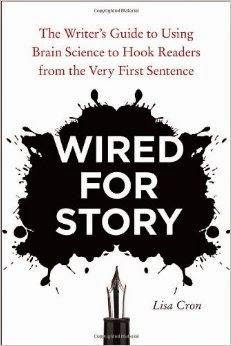
http://www.amazon.co.uk/Wired-Story-Writers-Science-Sentence/dp/1607742454/ref=sr_1_1


And when I noticed words of praise for Roz Morris' book by author Lisa Cron, I figured if she likes Roz Morris' ideas, maybe she has some good ideas of her own. My instincts proved to be right. I have almost finished reading Lisa Cron's how-to-write book, Wired for Story, The Writer's Guide to Using Brain Science to Hook Readers from the Very First Sentence. It is a joy to read.

It sticks holes in many myths about writing and basically explains why stories are essential to our survival as human beings. Telling stories is one of the things that makes us different from other species; it makes us human, even more than our opposing thumbs. Why? Because our brains are 'wired' for story, we think better in terms of story; we need to have an emotional connection when learning; we need to see a pattern and to follow a logical cause-and-effect reasoning. Stories make us sit up and pay attention to important information that could save our lives. Good stories help us to think about how we could solve problems in the future, by letting us see examples of what can go wrong for other people -- without us being in any real danger ourselves.

According to Lisa Cron, if you want to be a successful author (whose work people actually read), telling a good story is more important than writing well. Many books to help author-wannabees, concentrate on grammar usage and correct metaphors, but don't explain what a good story really is. 

A key phrase in Lisa Cron's book is "information on a need-to-know basis". Our brains cannot retain more information than just four thoughts at a time. You shouldn't pack your novel with a lot of unnecessary information that takes the reader away from the main story and does not have anything to do with the protagonist or the problems that the protagonist must deal with or solve. Lisa Cron uses brain research and examples from literature and films to helps us understand how to tell a good story. (See pages 220ff.)

Lisa Cron's book, Wired for Story, lives up to its message. It is thought-provoking as well as thoroughly entertaining and fun to read; a non-fiction work that is a page-turner.

Examples of new light on old myths about writing from Lisa Cron's book:

MYTH: "Show, Don't Tell" is Literal --
Don't tell Me John is Sad, Show Him Crying
--
REALITY: "Show, Don't Tell" is Figurative --
Don't Tell Me John is Sad, Show Me Why He's Sad

----

MYTH: Writers Are Rebels Who Were Born to Break the Rules
--
REALITY: Successful Writers Follow the Damn Rules

-------
The End

News blurbs:

*  November means NaNoWriMo for many of us writer-wannabees. Last year (2013), I did not even attempt to use NaNoWriMo to write a novel. This spring I started writing notes on index cards using Roz Morris' suggested methods (Read about Roz' how-to write-books here.) This year, thanks to Roz, I do have an outline to follow, so my chances are slightly better. But I still have the problem of looking for a part-time job and listing new items for my shops. Plus two school-aged children to rear. If time could be purchased in a jar, I would probably be cuing up to the counter to buy it.


My son, Erik, Maria (friend) & my daughter, Elisabet


*  Halloween came and went in a swoosh. If you are curious about how my children, Erik and Elisabet (12 and 10 years of age) celebrated this curiously foreign holiday here in Sweden, take a look at the photos here. We had everything but candy-corn, which I miss, and I didn't bother with a pumpkin-jack-o-lantern, even though tiny pumpkins are sold here too.

 
Daughter and Father


*  November first was my dear sweet father's birthday. He would have been 97 years old. I think of him often, especially when I read and write. I wish that I could talk to him about the books I read or the films that I see. He might have liked the Downton Abbey-series, that I only recently discovered on http://www.swefilmer.com. Since he was born in 1917, it covers a period (1912 to 1924) that he loved. Daddy was very much interested in WWI and its impact upon society; how it changed the way people lived and thought. 
Daddy loved England. He was sent there when he was drafted into the US army during WWII. He was impressed with land itself, and the ordinary English people. He loved the culture and traditions. And he was seeing them at a time when they were perhaps not at their best. Or maybe they were. Maybe World War II brought out the best in them, or at least in some of them. Of all of the organisations to help soldiers, a long way from home, he thought that the Salvation Army in England did the best job. This is my little tribute to my father's memory and to all of you wonderful people in the UK.


Best wishes,
Anna


First Commenter:
Delorah
of
Book Lover

http://dolorah.blogspot.se/

Translate a text here: